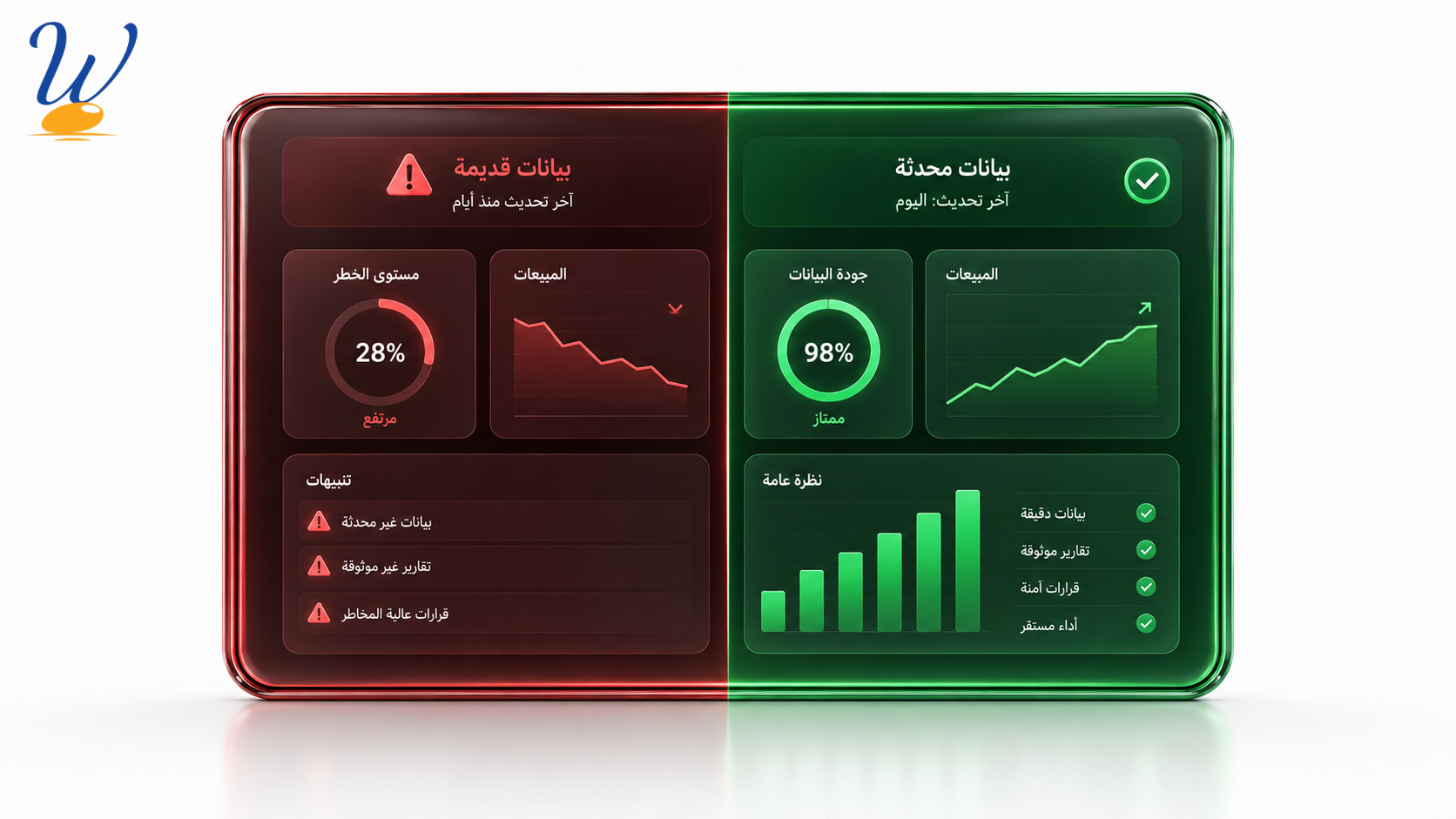
When Numbers Lead to the Wrong Decision
In many small and medium-sized businesses, a financial crisis does not begin when sales decline, nor when profits fall, nor even when a sudden liquidity shortfall arises.
The crisis often begins much earlier, when the financial picture lags behind the true reality of the business.
The business owner may see good sales, reports that appear reassuring, and figures that suggest the situation is stable. But in reality, they may be looking at data that no longer reflects the current moment. These figures reflect what happened weeks or months ago, while the company has already changed: collections have slowed, expenses have risen, inventory has increased, or liquidity has begun to tighten.
This is where the danger of delayed financial reports becomes apparent.
The problem is not merely that the report arrived late, but that a decision may be made based on a reality that no longer exists.
In a fast-paced business environment, this delay is not a mere accounting detail, but a direct factor in the quality of decision-making, the company’s stability, and its ability to grow.
What Are Delayed Financial Reports?
Delayed financial reports are those that reach management after they are no longer needed, or after important decisions have already been made.
A company may have an accounting system, recorded invoices, bank statements, and sales and expense reports. But having the numbers alone is not enough.
The most important question is:
Are these numbers current enough to make the right decision?
When the monthly closing is delayed, bank reconciliations are not performed regularly, expenses are recorded long after they occur, or accounts receivable are not closely monitored, a serious gap begins to emerge between what is happening within the company and what management sees in the reports.
This gap leads decision-makers to believe they are seeing the full picture,When in fact, he is looking at an outdated version of it.
Why might a company struggle despite rising sales?
One of the most common mistakes in business management is the belief that rising sales automatically mean the company is in good financial health.
But the financial reality is more complex than that.
Sales may be rising, yet the company may still be facing cash flow pressure.
Revenue may be increasing, while the ability to pay salaries or suppliers may be declining.
Outstanding invoices may look excellent, yet a significant portion of them may not be converted into actual cash due to late payments by customers.
A company does not survive on recorded sales alone, but on available cash, actual margins, and its ability to meet its obligations on time.
A company may struggle despite high sales due to:
Slow collection from customers.
Accumulation of accounts receivable.
Inflated operating expenses.
Rising cost of goods or services.
Poor inventory management.
Declining profit margins.
Reliance solely on bank balance as an indicator of financial health.
Unclear tax or zakat obligations.
Lack of up-to-date cash flow statements.
Therefore, it is not enough for a business owner to know how much was sold this month.
What is more important is to know: How much of these sales has been converted into cash? How much actual profit remains after expenses? And can the company finance its upcoming operations without strain?
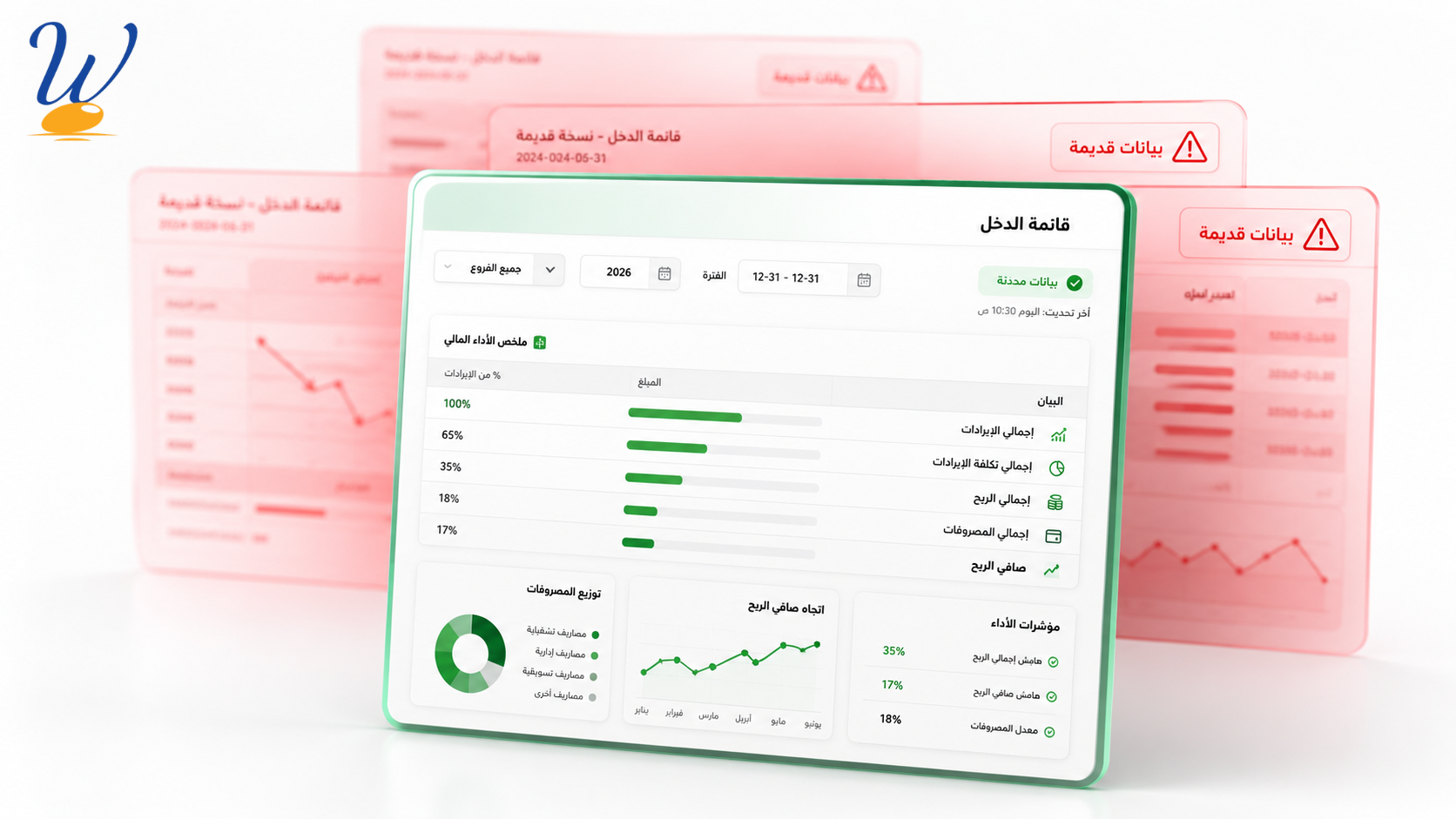
How Do Delayed Financial Reports Lead to Decisions That Seem Correct but Are Actually Dangerous?
The most dangerous aspect of delayed financial reports is that they do not always lead to decisions that seem wrong from the start.
On the contrary, many of the decisions resulting from them seem very logical at the time.
When a manager sees that sales are on the rise, they may decide to expand.
And when profits look good in an outdated report, they may increase spending.
And when liquidity appears stable on paper, they may commit to new contracts or increase purchases.
But the problem is that these decisions may be based on numbers that no longer reflect the current reality.
In just a few weeks, the company’s situation may change completely.
Customers may fall behind on payments.
The cost of materials or operations may rise.
Short-term liabilities may pile up.
Margins may shrink without this being immediately apparent in the reports.
And the company may appear profitable on paper, but be cash-strapped.
This is when a decision that is “correct on the surface” becomes the start of a bigger problem.
Expansion isn’t always a mistake.
Increasing marketing isn’t always a mistake.
Hiring isn’t always a mistake.
But it is a mistake to make these decisions without a recent financial analysis that clarifies the company’s true ability to sustain them .
What are the signs that your company’s numbers don’t reflect reality?
There are clear indicators that a company is operating based on outdated figures, even if the accounts are in order and reports are prepared from time to time.
Among the most notable of these signs are:
There are no regular monthly reports.
The monthly closing is delayed for long periods.
Bank reconciliations are not performed on a regular basis.
It is difficult to quickly determine the true net profit.
Management relies solely on bank balances to make decisions.
There is no accurate tracking of accounts receivable aging.
Some expenses appear long after they have occurred.
There is no clear comparison between sales and costs.
Decision-makers do not know where cash is leaking.
Problems are discovered after they occur, not before.
These signs do not merely indicate an accounting problem.
Rather, they mean that management decision-making itself is at risk, because it relies on incomplete or outdated information.
Financial statements are no longer just an accounting function
For a long time, some companies treated accounting as an operational function whose purpose was to record invoices, prepare financial statements, process payroll, or meet regulatory requirements.
But this view is no longer sufficient.
In today’s business environment, financial reports have become an essential management tool. They don’t just tell management what happened; they help management understand what to do next.
Modern financial management doesn’t stop at asking:
How much did we sell this month?
Instead, it asks more important questions:
Is this growth actually profitable?
Are sales turning into cash?
Which expenses are quietly rising?
Are there customers who are late on payments?
Is inventory eating into cash?
Is the current expansion sustainable?
Is the company able to meet its upcoming obligations?
These questions cannot be answered with reports that arrive late, nor with incomplete figures, nor with general impressions of the business situation.

The Difference Between a Company That Reads the Present and One That Reads the Past
A company that relies on outdated financial reports is like a driver who looks only in the rearview mirror. It sees the road it has already traveled, but it does not see the next turn.
A company with accurate, up-to-date figures, on the other hand, doesn’t wait for a crisis to emerge before taking action.
It reads the signs early.
It notices a decline in collections before it turns into a cash shortfall.
It monitors rising expenses before they put pressure on profitability.
It spots shrinking margins before realizing that sales are no longer as profitable as they seem.
And it understands the impact of expansion before it becomes a burden on the company.
For this reason, the quality of financial decision-making depends not only on a manager’s experience or intuition, but also, to a large extent, on the recency of the data on which those decisions are based.
How can you protect your company from decisions based on outdated data?
The solution isn’t just to produce more reports, but to build a systematic financial process that makes the numbers an integral part of day-to-day company management—not just a month-end procedure.
1. Monthly Closing on a Fixed Date
Having a clear deadline for the monthly closing helps management quickly understand the results of operations and prevents errors from accumulating over long periods.
The longer the closing is delayed, the longer it takes to understand profitability, liquidity, and expenses.
2. Regular Bank Reconciliation
Bank reconciliations help verify the accuracy of cash flows, identify discrepancies, and link bank balances to actual transactions.
A bank balance alone is not enough to understand the financial situation, but it becomes more useful when linked to accurate and up-to-date reports.
3. Tracking Collections and Accounts Receivable
Sales are worthless if they remain outstanding in accounts receivable.
Therefore, the company needs to continuously monitor the age of receivables, delinquent customers, and the collection rate, so that high sales do not turn into cash flow pressure.
4. Monitor Expenses Before They Get Out of Hand
Expenses don’t always rise suddenly.
Often, they grow gradually and quietly.
Clear monthly reports help management identify where costs are rising, whether this increase is justified, and whether it supports growth or eats into profits.
5. A Clear Financial Overview for Decision-Makers
Business owners don’t need dozens of complex spreadsheets.
They need a concise and accurate financial overview that answers the critical questions:
What is the profitability situation?
What is the liquidity situation?
What is the collection rate?
What is the level of liabilities?
Where are expenses rising?
What risks should be addressed now?
When these answers are clear and timely, decision-making becomes more reliable.
Where does Wazen come in?
At Wazen, we don’t treat accounting as merely a recording process, but as a tool that helps business owners understand their financial situation and make better decisions.
We help companies organize their accounts, track their financial data, improve the clarity of their reports, and monitor the metrics that directly impact profitability, liquidity, and stability.
The idea is not just for the company to know what happened in the past, but to have a financial picture that more closely reflects reality—one that helps it take action at the right time.
Because a company that sees its numbers clearly doesn’t wait for a crisis to hit before it understands them.
Bottom line: The risk lies not only in the decision itself… but in the timing of the information.
In volatile markets, the problem is no longer just that a company makes the wrong decision.
The more serious problem is making a decision that seems correct but is based on outdated financial reports.
Every day a company operates without accurate, up-to-date figures, the likelihood of making decisions that do not reflect its true reality increases.
That is why the speed and accuracy of financial information have become an essential part of companies’ stability and growth, rather than a minor accounting detail.
Ultimately, many companies do not fail because they lack sufficient opportunities, but because they discover the truth only after a decision has already been made.